
Introduction
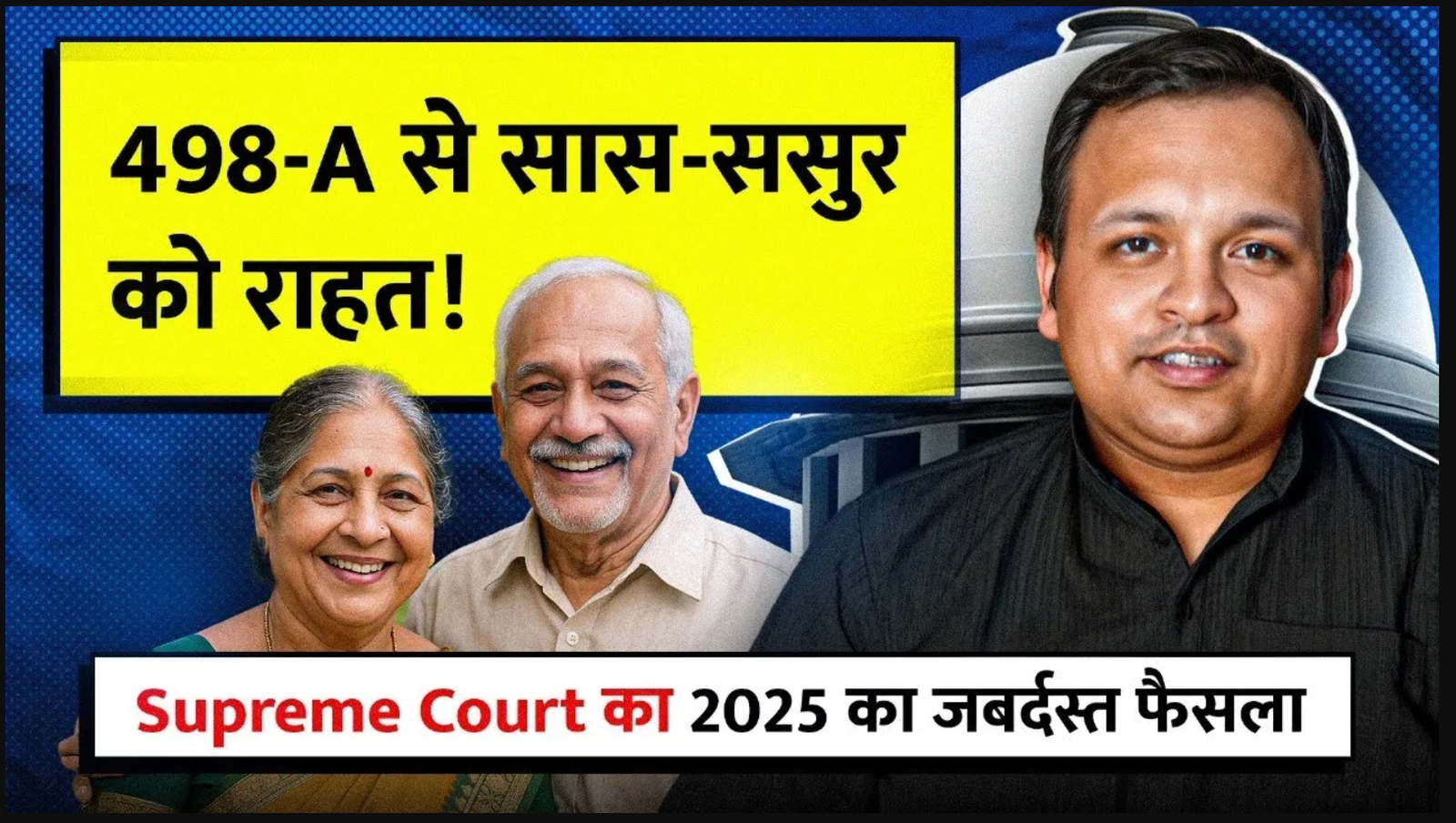
In a significant judgment dated 16 April 2025, the Supreme Court of India in Kamal & Ors. v. State of Gujarat & Anr. (2025 INSC 504) examined the increasing tendency to invoke Section 498A of the Indian Penal Code in matrimonial disputes without specific or substantiated allegations. The Court emphasised that the provision, though enacted to protect women from dowry-related cruelty, cannot be misused to implicate in-laws through vague and omnibus accusations. The appeal was partly allowed, resulting in the quashing of criminal proceedings against the parents-in-law while permitting the case to proceed against the husband.
Facts of the Case
The marriage between Kamal and the complainant was solemnised in the year 2005. Differences arose between the parties soon after the marriage; however, they continued to reside together for several years primarily in the interest of their children. In 2019, Kamal initiated divorce proceedings by filing a petition under Section 13 of the Hindu Marriage Act, 1955. The wife was served with the divorce summons on 17 July 2019. Within a span of three days, on 20 July 2019, she lodged a First Information Report under Section 498A of the IPC against the husband, his parents, and other relatives, alleging harassment, taunting, scolding, and dowry demands. Following investigation, the police filed a charge sheet, and the trial court took cognisance of the offences. The accused persons approached the Gujarat High Court under Section 482 of the Code of Criminal Procedure seeking quashing of the FIR; however, the High Court dismissed the petition and directed the parties to face trial. Aggrieved by the said order, the husband and his family members approached the Supreme Court by way of Special Leave Petition (Criminal) No. 9167 of 2024.
Arguments Before the Supreme Court
The appellants contended that the FIR was a retaliatory measure filed immediately after the initiation of divorce proceedings and after nearly fourteen years of alleged endurance of cruelty. It was argued that the allegations against the parents-in-law were general in nature and did not disclose any specific instance of dowry-related harassment, which is a mandatory ingredient for attracting Section 498A IPC. The appellants further submitted that routine domestic disagreements or alleged extramarital relationships cannot, by themselves, constitute cruelty under the said provision. It was urged that the continuation of criminal proceedings against the in-laws amounted to abuse of the process of law.
On the other hand, the State and the complainant argued that the investigation had resulted in a charge sheet and that the truthfulness of allegations and the individual roles of the accused ought to be examined during trial. It was contended that interference at the stage of quashing would be premature and unwarranted.
Supreme Court’s Analysis
The Supreme Court critically analysed the contents of the FIR and reiterated that Section 498A IPC is attracted only when there are clear and specific allegations of cruelty linked to unlawful dowry demands. The Court observed that general allegations such as scolding or taunting, without any nexus to dowry, are insufficient to sustain criminal proceedings against in-laws. The Court also took note of the timing of the FIR, which was lodged immediately after the wife received summons in the divorce proceedings, and held that such timing raises a serious doubt regarding the bona fides of the complaint.
The Court further observed that the High Court had failed to exercise its jurisdiction properly by mechanically dismissing the quashing petition without examining whether the FIR disclosed the essential ingredients of the offence. Emphasising the need to protect innocent family members from unnecessary criminal trials, the Court held that judicial scrutiny at the stage of quashing is essential to prevent misuse of criminal law.
Key Legal Issues and Findings
The principal issue before the Court was whether vague and omnibus allegations, unconnected with dowry demands and made after an inordinate delay, could justify the prosecution of in-laws under Section 498A IPC. The Court clarified that the legislative intent behind Section 498A is to protect women from genuine dowry-related cruelty and not to penalise every form of matrimonial discord. It was further clarified that an alleged extramarital affair, in isolation, does not amount to cruelty under Section 498A IPC. The Court reaffirmed that when allegations appear mala fide, delayed, or lack specific material particulars, courts are duty-bound to exercise their inherent powers under Section 482 CrPC to quash such proceedings.
Relevant Supreme Court Precedents
In Dara Lakshmi Narayana v. State of Telangana (2024), the Supreme Court quashed proceedings under Section 498A IPC on the ground that the allegations were vague and did not disclose any specific act of cruelty. Similarly, in Archana Gupta v. State of Haryana (2025), the Court cautioned against the mechanical application of Section 498A IPC and observed that minor matrimonial disagreements are often exaggerated, leading to harassment of the husband and his relatives through criminal proceedings.
Final Decision
The Supreme Court partly allowed the appeal and quashed the criminal proceedings under Section 498A IPC against the father-in-law and mother-in-law, holding that the allegations against them were general and devoid of any specific dowry-related cruelty. However, the Court permitted the prosecution to continue against the husband, finding that the allegations against him disclosed a prima facie case warranting trial.
Conclusion
This judgment reaffirms the settled legal position that vague and omnibus allegations against in-laws cannot be the basis for criminal prosecution under Section 498A IPC. The Supreme Court has once again underscored the importance of preventing the misuse of criminal law in matrimonial disputes while simultaneously ensuring that genuine victims of cruelty are not deprived of legal protection. The ruling strikes a careful balance between safeguarding individual liberty and upholding the object of the statute.
For a detailed explanation of the judgment and its legal implications, refer to the video analysis on the YouTube channel Legal Shots. For professional legal advice or opinion, visit https://thelegalshots.com/legal-opinion/.