Introduction
In a significant move to balance victim protection with preventing abuse of legal provisions, the Supreme Court of India, in Shivangi Bansal v. Sahib Bansal (2025 INSC 883), endorsed comprehensive guidelines originally framed by the Allahabad High Court. This landmark ruling addresses the frequent misuse of Section 498A IPC meant to combat cruelty against married women in matrimonial disputes, reinstating a “cooling-off” period and mandatory family mediation to avoid hasty arrests.
Facts of the case
Shivangi Bansal and Sahib Bansal, married in 2015, saw their union unravel by 2018 amid escalating family conflicts. What followed was a barrage of cross-litigations: FIRs under Section 498A, domestic violence complaints, maintenance claims, divorce petitions, and even third-party suits involving defamation and land disputes across Delhi and Uttar Pradesh courts. The husband spent over 100 days in jail, highlighting the human cost of unchecked allegations. Both parties eventually sought resolution before the Supreme Court via transfer petitions. In a rare display of reconciliation, they agreed to dissolve the marriage, settle custody, waive maintenance, and quash all cases.
The Court, invoking Article 142 for complete justice, approved this while upholding Allahabad HC’s 2022 directives from mukesh Bansal v. state of U.P. case to prevent Section 498A’s weaponization.
Supreme Court Decision
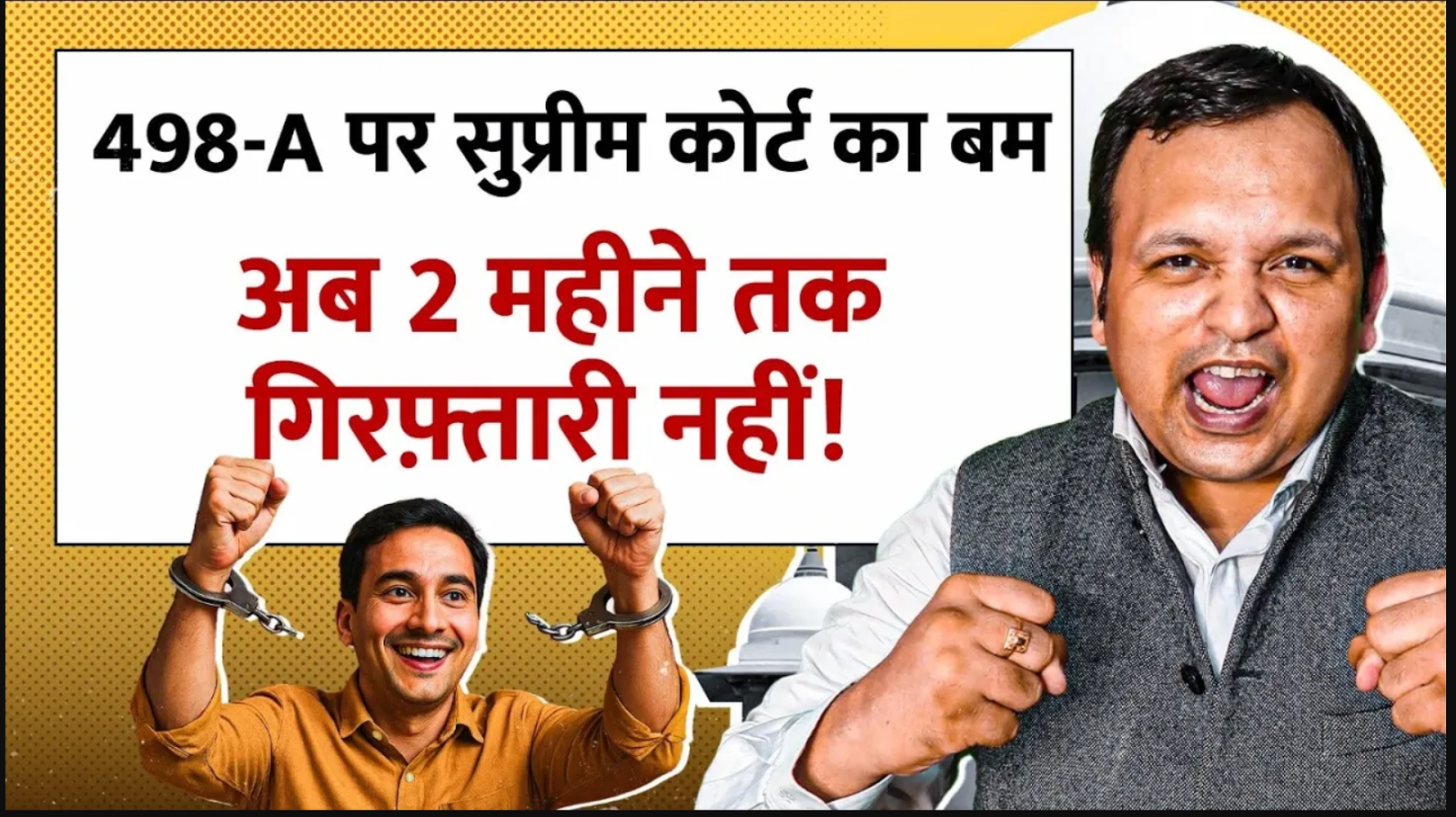
The court invoked its power under Article 142 of the constitution to grant a formal decree of divorce, as the marriage had irretrievably broken down and both parties consented. All pending criminal and civil proceedings between Shivangi Bansal and Sahib Bansal, including the FIR under Section 498A IPC, were quashed in light of a comprehensive mutual settlement. The Court formally endorsed the procedural safeguards issued earlier by the Allahabad High Court, including, two-month no-arrest period after a 498A FIR is lodged and Referral of cases to Family Welfare Committees for preliminary assessment before any coercive action is taken.
The 14 Game-Changing Guidelines
The endorsed framework, inspired by the 2018 Social Action Forum ruling, introduces Family Welfare Committees (FWCs) and a two-month no-arrest “cooling period.” Here’s the breakdown:-
1. No Immediate Arrests: Post-FIR, no arrests for two months; refer cases to district FWCs promptly.
2. Scope Limitation: Applies to 498A cases without Section 307 (attempt to murder) or offences with <10 years’ imprisonment.
3. Cooling-Off Enforcement: Strict two-month pause before any police action; FWC intervention mandatory.
4. FWC Structure: Each district needs 1+ FWCs under the District Legal Services Authority, overseen by the Sessions Judge.
5. Committee Composition: Three members, including young mediators/advocates, social workers, retired judges, or spouses of judicial officers.
6. Witness Immunity: FWC members can’t be summoned as witnesses.
7. Referral Protocol: Magistrates must forward 498A complaints to FWCs immediately.
8. Mediation Mandate: FWCs summon parties + up to four elders for talks within two months; attendance is compulsory.
9. Report Generation: FWCs submit detailed reports with facts and opinions to police/magistrates post-deliberations.
10. Investigation Balance: Peripheral probes (e.g., medical reports) continue, but no coercion during cooling period.
11. Report Adjudication: Officers/magistrates decide on merits after two months, per CrPC.
12. Training & Honorarium: Legal Services provide weekly training; members serve pro bono or with minimal fees.
13. Specialized Investigators: Cases handled by trained, integrity-certified officers after one-week matrimonial dispute training.
14. Settlement Closure: Courts can quash proceedings upon amicable resolution.
Laws Involved
Article 142 Indian constitution: empowers the supreme court to pass any order or decree necessary to do complete justice in any case before it.
Section 498A, 307, 376, 406 IPC: husband or relative husband of a woman subjecting her to cruelty, attempt to murder, punishment of rape, punishment for criminal breach of trust respectively.
Section 3,4 Dowry prohibition Act: penalty for giving or taking dowry, penalty for demanding dowry respectively.
Conclusion
The Supreme Court of India, in Shivangi Bansal delivered a landmark ruling, resolving the high-profile matrimonial dispute between Shivangi Bansal and Sahib Bansal. The bench, led by Chief Justice B.R. Gavai and Justice A.G. Masih, invoked under Article 142 aimed to deliver “complete justice” by prioritizing reconciliation and closure. The apologies were published as directed.In an era of rising matrimonial litigations, Shivangi Bansal signals a humane pivot: law as healer, not hammer. Couples in discord, take notemediation might just mend what courts can’t.
In cases involving Section 498A IPC, public opinion is often formed hastily, influenced by headlines, social media narratives, or preconceived notions about guilt and victimhood. This judgment serves as a reminder that opinions must be grounded in legal facts, due process, and judicial reasoning rather than emotional reactions. Awareness of one’s own opinion requires recognising that allegations are not convictions, and that criminal law must operate on evidence, procedure, and fairness. A balanced perspective respects the rights of genuine victims while also acknowledging the constitutional protection of the accused against arbitrary arrest and harassment. Judicial safeguards exist precisely to ensure that justice is not driven by public sentiment but by law.For a deeper understanding of the judgment and its implications, watch my detailed analysis on my YouTube channel, Legal Shots!
If doubts still persist, contact our Legal Experts at https://thelegalshots.com/legal-opinion