
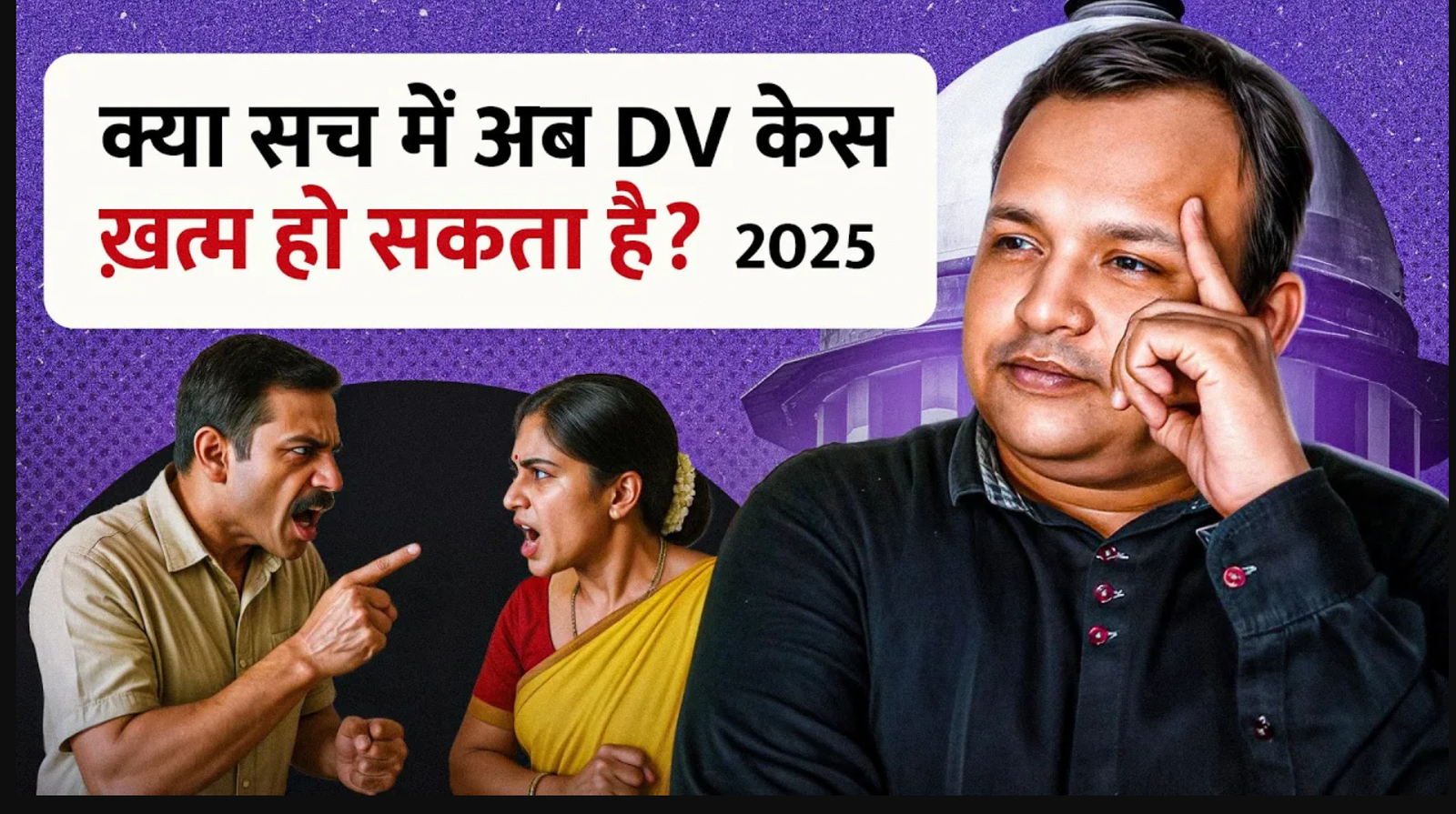
Shaurabh Kumar Tripathi v. Vidhi Rawal | Criminal Appeal No. 2688 of 2025
Introduction
In a landmark judgment dated 19 May 2025, the Supreme Court of India conclusively settled a long-standing legal controversy regarding the powers of High Courts under the Protection of Women from Domestic Violence Act, 2005.
In Shaurabh Kumar Tripathi v. Vidhi Rawal, the Supreme Court held that High Courts can exercise their inherent powers under Section 482 of the Code of Criminal Procedure, 1973, now Section 528 of the Bharatiya Nagarik Suraksha Sanhita, 2023, to quash proceedings under the Domestic Violence Act at any stage where continuation of proceedings would amount to abuse of process or miscarriage of justice.
The judgment carefully balances the object of protecting women from domestic violence with the need to prevent misuse of welfare legislation in matrimonial disputes.
Importance of the Judgment
The ruling resolves conflicting interpretations across High Courts, protects innocent family members from frivolous litigation, clarifies the criminal court nature of Domestic Violence Act proceedings, and confirms that inherent powers continue under the new BNSS framework.
Facts of the Case
The marriage between Vidhi Rawal and Prateek Tripathi took place on 12 December 2019 in Dewas, Madhya Pradesh. The wife alleged dowry demands of Rs. 20 lakh and a luxury SUV, physical and mental cruelty, threats, and harassment, including incidents during her stay abroad. She registered FIR No. 3 of 2022 under Sections 498A, 504, 506 and 34 of the Indian Penal Code. Subsequently, she filed an application under Section 12 of the Domestic Violence Act being MJCR No. 215 of 2022 before the District and Sessions Judge, Dewas, seeking protection orders, residence rights, monetary relief, child custody and compensation.
The husband and his family members filed petitions under Section 482 CrPC before the Madhya Pradesh High Court seeking quashing of the Domestic Violence proceedings on the ground of abuse of process. The High Court dismissed the petitions, holding that proceedings under the Domestic Violence Act are civil in nature and outside the scope of Section 482 CrPC.
Aggrieved by the said order, the appellants approached the Supreme Court.
Supreme Court’s Interpretation and Legal Reasoning
Justice Abhay S. Oka, authoring the judgment, clarified that merely because the reliefs under the Domestic Violence Act are civil in nature, the proceedings cannot be excluded from the inherent jurisdiction of the High Court.The Court held that Magistrates entertaining applications under the Domestic Violence Act function as criminal courts under Section 6 of the Code of Criminal Procedure. Consequently, proceedings before such courts are amenable to the High Court’s inherent powers.
The Supreme Court rejected the rigid civil versus criminal distinction and recognised the Domestic Violence Act as a hybrid statute. While the reliefs under Sections 18 to 23 are restorative and civil in nature, they are enforced through criminal courts using procedures prescribed under Section 28 of the Act.The Court further clarified that the availability of an appellate remedy under Section 29 of the Domestic Violence Act does not bar the exercise of inherent powers under Section 482 CrPC, similar to how criminal appeals do not restrict such jurisdiction.
However, the Court cautioned that quashing of Domestic Violence proceedings must be exercised sparingly and only in exceptional cases involving manifest illegality, mala fide intent, or gross abuse of judicial process, so as not to defeat the protective purpose of the Act.
Legal Provisions Involved
Protection of Women from Domestic Violence Act, 2005
Section 12 provides for filing of applications seeking relief.
Sections 18 to 23 deal with protection orders, residence rights, monetary relief, custody and compensation.
Section 28 prescribes procedure broadly governed by the Code of Criminal Procedure.
Section 29 provides for appeal.
Sections 31 and 33 prescribe penal consequences for breach of orders.
Code of Criminal Procedure, 1973
Section 200 relates to cognizance of complaint.
Section 482 confers inherent powers on High Courts to prevent abuse of process and secure ends of justice.
Bharatiya Nagarik Suraksha Sanhita, 2023
Section 528 continues the inherent powers of High Courts after repeal of the CrPC.
Key Takeaways
High Courts have jurisdiction to quash proceedings under Section 12 of the Domestic Violence Act by exercising inherent powers under Section 482 CrPC or Section 528 BNSS. Magistrates under the Domestic Violence Act act as criminal courts, making their proceedings subject to inherent jurisdiction. The power to quash must be exercised cautiously and only in cases of frivolous, malicious or abusive litigation, ensuring genuine victims remain protected.
Recent Judicial Developments
The Jammu and Kashmir High Court, in its judgment dated 29 August 2025, applied the principles laid down in Shaurabh Kumar Tripathi v. Vidhi Rawal and held that limitation under Section 468 CrPC applies to penal proceedings under Sections 31 and 33 of the Domestic Violence Act. This reinforces the quasi-criminal character of enforcement under the Act and prevents perpetual liability.
Related Landmark Judgments
Kunapareddy alias Nookala Shanka Balaji v. Kunapareddy Swarna Kumari (2016) 11 SCC 774
Prabha Tyagi v. Kamlesh Devi (2022) 8 SCC 90
Devendra Agarwal v. State of Uttar Pradesh (Allahabad High Court, 2024)
Conclusion
The judgment in Shaurabh Kumar Tripathi v. Vidhi Rawal stands as a defining precedent in domestic violence and matrimonial litigation. It empowers High Courts to prevent misuse of the Domestic Violence Act while preserving its core objective of protecting women from abuse. By allowing limited and cautious exercise of inherent powers, the Supreme Court has ensured protection without persecution and strengthened confidence in the justice delivery system.
For a detailed explanation of this judgment and its practical implications, watch the full analysis on my YouTube channel, Legal Shots.
If you are facing a false or malicious Domestic Violence case or require legal advice on quashing proceedings under Section 482 CrPC, consult our legal experts at
https://thelegalshots.com/legal-opinion