
Introduction
Property disputes in India frequently arise due to confusion between ancestral and self-acquired property. The distinction is extremely important because it determines ownership rights, succession, and the legal ability to transfer property.Many families assume that once a property is ancestral, it continues to remain so forever. However, this assumption is not always legally correct.In the case of Angadi Chandranna v. Shankar & Ors, the Supreme Court has clarified a crucial legal principle relating to the status of property after partition in a Hindu Joint Family. This judgment brings much-needed clarity and is highly relevant for families dealing with partition, inheritance, and property disputes.
Facts of the Case
The dispute arose among members of a Hindu joint family concerning rights over property that was originally ancestral in nature.A partition had taken place in the family, and specific shares were allotted to individual members. After the partition, a disagreement arose regarding the legal character of the property received by one of the parties.One side argued that even after partition, the property retained its ancestral character, which meant that descendants would continue to have a right by birth.
The other side contended that once a partition is effected, the property ceases to be ancestral and becomes self-acquired in the hands of the individual who receives it, giving them complete ownership and control.Due to this conflict of interpretation, the matter reached the courts and ultimately came before the Supreme Court for final adjudication.
What Did the High Court Say
The High Court examined the facts and circumstances of the case but primarily focused on resolving the dispute between the parties rather than laying down a clear legal principle on the nature of property after partition.The lack of clarity at this stage made it necessary for the Supreme Court to interpret the law and settle the issue conclusively.
What Did the Supreme Court Say
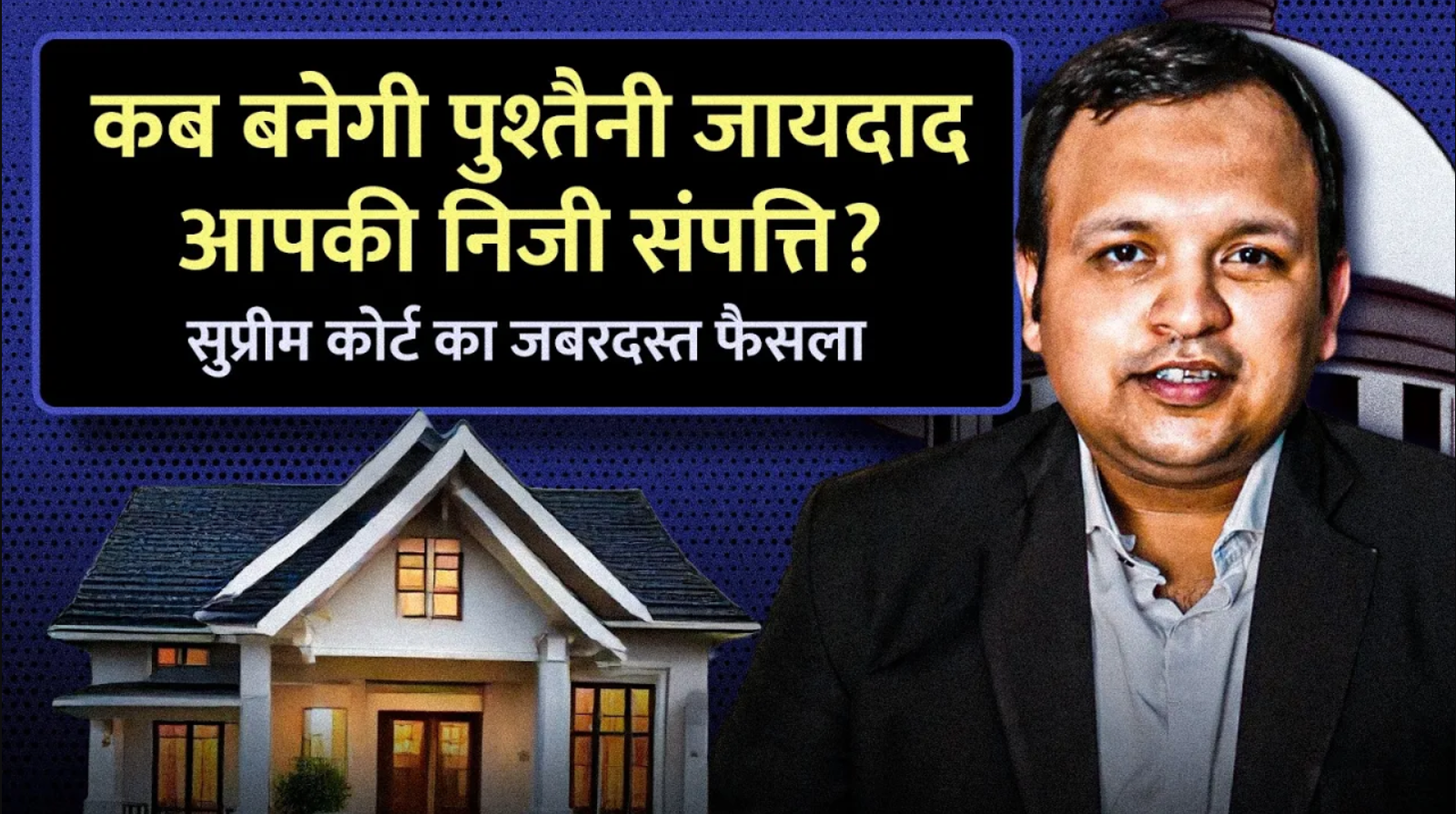
The Supreme Court delivered a clear and authoritative ruling on the issue.It held that once a partition takes place in a Hindu Joint Family, the share received by a coparcener becomes his self-acquired property.The Court emphasized that the moment partition is effected, the joint family status comes to an end to that extent, and the property loses its ancestral character.As a result, the individual receiving the share becomes the absolute owner of that property.The Court further clarified that such an owner has full rights to sell, transfer, gift, or otherwise deal with the property without needing consent from other family members.Importantly, the Court held that children or descendants do not acquire any birthright in such property after partition, since it no longer remains ancestral.This ruling removes ambiguity and reinforces the principle of individual ownership post-partition.
Self-Acquired vs Ancestral Property Explained
Ancestral Property
Ancestral property refers to property that is inherited up to four generations in a Hindu joint family without being divided.In such property, rights arise by birth. This means that children automatically acquire an interest in the property as soon as they are born.The property is jointly owned by coparceners, and any decision regarding its transfer or sale typically requires consent.
Self-Acquired Property
Self-acquired property refers to property that is acquired by an individual through their own efforts, income, purchase, gift, will, or through partition.In such cases, the owner has absolute control over the property. They can sell, transfer, gift, or dispose of it in any manner they choose.No other person, including children, has an automatic right over such property during the lifetime of the owner.
When Does Ancestral Property Become Self-Acquired
The Supreme Court clarified that the conversion from ancestral to self-acquired property takes place upon partition.Once a valid partition is carried out, each coparcener receives a defined share. This share is no longer treated as part of the joint family property.Instead, it becomes the separate and exclusive property of the individual receiving it.This change is legally significant because it ends the concept of shared ownership and birthright in that portion of property.
Can Property Be Reconverted into Ancestral Property
Generally, once a property becomes self-acquired after partition, it does not automatically revert to ancestral property.However, there are limited situations where it may acquire the character of joint family property again.This can happen if the owner voluntarily blends the property with joint family assets or clearly expresses an intention to treat it as part of the Hindu Undivided Family.Such intention must be clear and unambiguous.
Legal Implications of the Judgment
This judgment has wide-reaching implications in property law.It strengthens the concept of individual ownership after partition and reduces unnecessary litigation arising from misunderstanding of property rights.It also provides clarity to families involved in property planning and succession.By clearly stating that children do not have automatic rights after partition, the Court has prevented misuse of the concept of ancestral property.The judgment will also help in smoother property transactions, as buyers and sellers can rely on clear ownership titles.
Expert Opinion
This judgment is a significant step towards simplifying and clarifying property law in India.In practice, many disputes arise because families continue to treat property as ancestral even after partition. This leads to confusion, conflicts, and prolonged litigation.The Supreme Court has correctly identified partition as a decisive event that changes the nature of property.From a legal and practical perspective, this ruling promotes certainty, reduces disputes, and supports effective property management.
Conclusion
The decision in Angadi Chandranna v. Shankar & Ors provides a clear answer to a long-debated question in property law.The Supreme Court has categorically held that once partition takes place, the property received becomes self-acquired in the hands of the individual.This principle is crucial for anyone dealing with ancestral property, family settlements, or partition disputes.Understanding this judgment can help individuals make informed decisions, avoid legal complications, and protect their property rights.
Title of the Case: Angadi Chandranna v. Shankar & Ors
Citation: Civil Appeal No. 5401 of 2025
Decided on: 22nd April 2025
Judgment Link-https://api.sci.gov.in/supremecourt/2022/10885/10885_2022_13_1502_60907_Judgement_22-Apr-2025.pdf
If doubts still persist, contact our Legal Experts at https://thelegalshots.com/legal-opinion